 Start My 7-Day Free Trial
Start Free
Start My 7-Day Free Trial
Start Free
Your joints have a budget, and most programmes spend it blindly. Cost-Based Training spends it where it is cheapest: every week the barbell work stays heavy and never goes to failure, supported and single-leg work goes close, and the machines take the punishment. Four days a week by default, or six with a restoration day, written by a qualified strength & conditioning coach and delivered a session at a time in the app.
Already sure? Go straight to the app

Effort without a structure stalls. Every session here has a target muscle, a rep number, an effort target and a reason, so the work finally shows in the mirror.
Barbells are never taken to failure. Machines are. That is the whole idea: push hardest where it costs your joints the least, so the heavy work stays crisp.
This is built for the long run, not for one hard month. Volume and effort climb where it is safe to climb them, and back off on purpose.
Effort-based targets scale every session to your current strength, so the same programme works on your first structured block and on your tenth. You are told how hard to push, and the load follows.
Continuous physique programming on the Cost-Based Training method: heavy, supported and machine work every week, the block sets the share. Four-day or six-day track.
Each block builds on the last, with sets, reps, targets and video demos laid out for every session. Open the app and today's work is waiting.
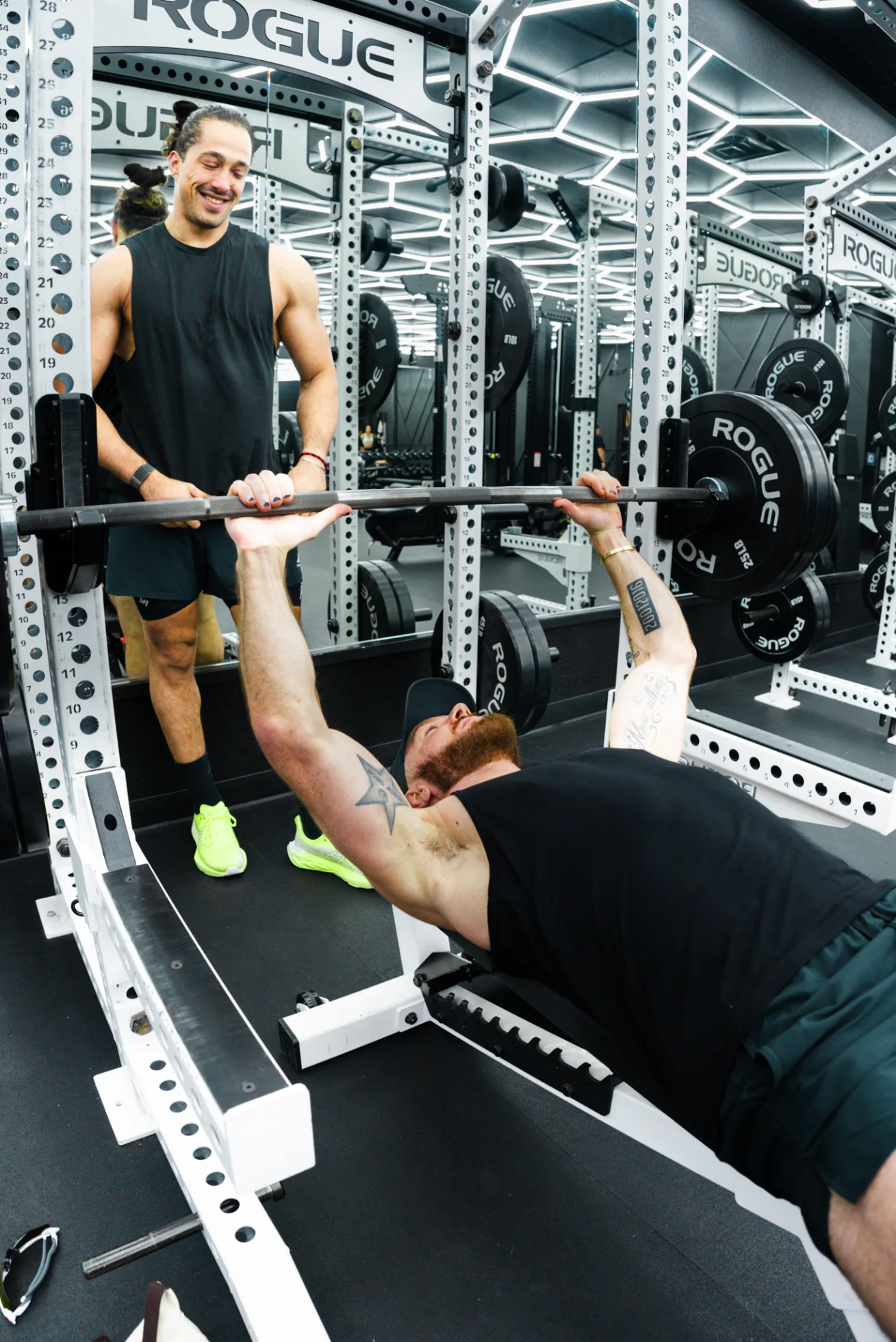
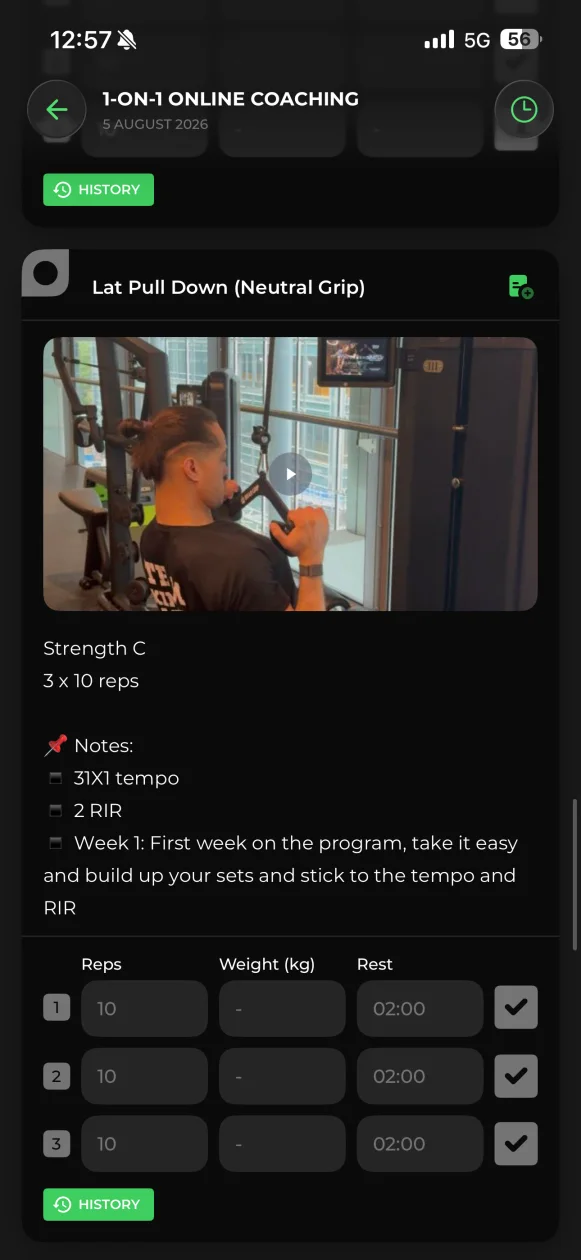
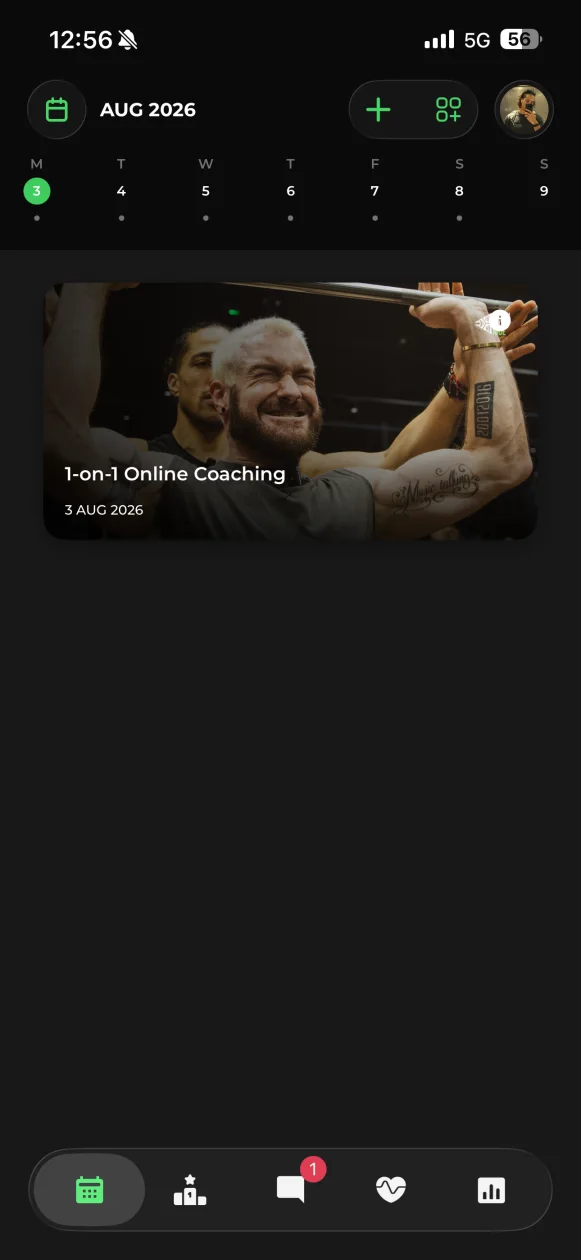
Every week trains all three classes. Across a cycle the sets move from the heavy lifts toward the machines, so joint cost falls while volume and effort climb. The heavy work is what makes you strong, the machine work is where the volume lands, and the light weeks are the design.
One training cycle of three blocks, and every week in it trains all three classes: Class 1, free and axial barbell work loaded heavy and never taken past two reps in reserve; Class 2, supported and single-leg work taken close to failure; and Class 3, machine and cable work taken to failure. The blocks change how the week's sets are shared. The Strength block puts most of them on Class 1, with joint cost at its highest and volume at its lowest. The Build block spreads them across all three, with joint cost coming down and volume climbing. The Volume block puts most of them on Class 3, with joint cost at its lowest and volume at its peak for the cycle. A recovery week ends every block. A testing week of logged top sets, photos and bodyweight ends the cycle, then the next cycle starts from the strength just built with the variants rotated.
Whether this is your first structured programme or your fifth season, Bodybuilding gives you coach-led structure with a clear plan to follow every single day.
Simple, repeatable weekly patterns make it easy to stay on track and keep progressing, however busy life gets.
Progressive blocks designed to move the numbers and deliver results you can see and feel.
Smart programming loads your body without grinding it down. Train hard for years, not just weeks.
Open the app and today's workout is waiting. Sets, reps, tempo, effort targets, video demos and Moe's coaching notes, all in one place, including guidance in the hardest weeks on when to drop a set and when to hold the line
Log your numbers, track your progress across blocks, and measure yourself at every testing week. Support from Moe and the TWM community keeps you accountable
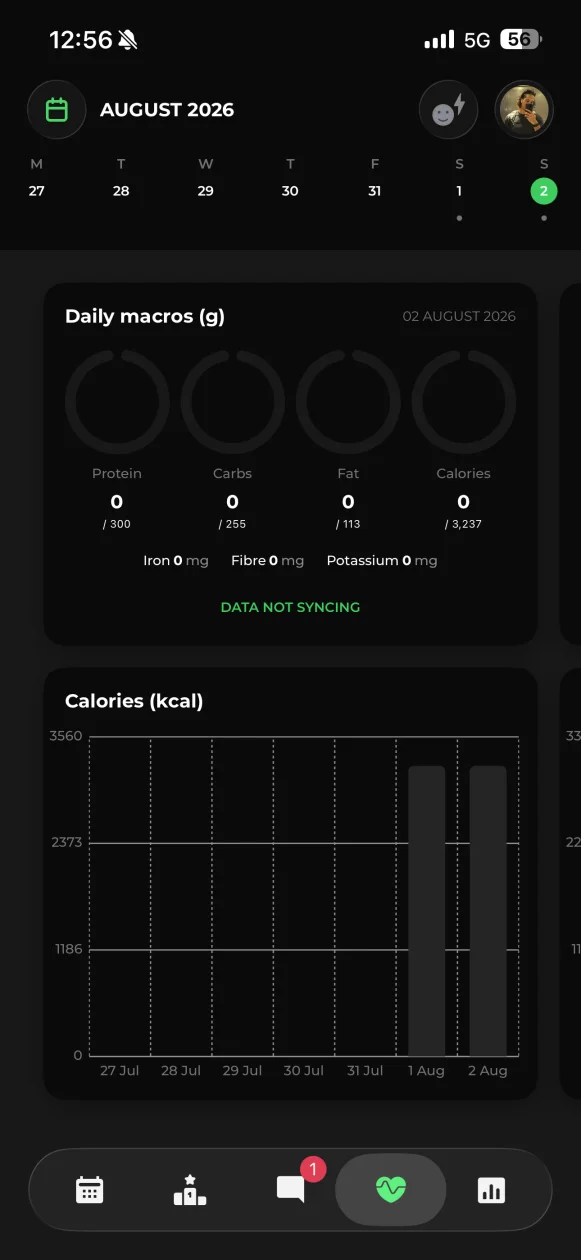

Moe is a qualified strength and conditioning coach and a competitive athlete. Every block is grounded in sports science and tested in his own training before it reaches yours. His philosophy is simple: teach you what to do and why, so you train smarter, progress faster and build results that last. This is the same method behind his 1:1 coaching, packaged to follow at your own pace.

Moe built a programme around my touring schedule instead of forcing me to build my life around a programme. I'm stronger now than before I started touring.

The Hyrox programme is genuinely built by someone who competes, not someone guessing. Every block had a purpose.

Running a company leaves little time to think about training. Moe handles the programming, I just show up and follow the plan, it works!
Everything you need to know about Bodybuilding
Because it is meant to. Every week trains all three classes, but the block decides how the sets are shared. A Strength block puts most of them on the heavy barbell lifts, which are low volume by nature, so the sessions are shorter. A Volume block moves most of them onto machines and cables, where it is cheapest on your joints to push hard, so the week gets much bigger. The loads you build in the heavy blocks get turned into muscle in the volume blocks: that is the design, not an accident. Volume drives growth, but with diminishing returns, so it climbs while it is still paying and backs off before it stops. The recovery week at the end of a block is not time off, it is where the growth you just trained for actually arrives. A week that feels light is the programme working, not going soft.
It is my method, built from the research on training volume and effort and from the joint-by-joint approach used in strength and conditioning. Every exercise carries a joint cost, and every week trains all three classes: barbell work loaded heavy and never taken past two reps in reserve, supported and single-leg work close to failure, and machines to failure. As the joint cost falls, the volume and the effort rise, so you push hardest where it is cheapest to push. The classes are our synthesis of the research, not a tested framework.
Four by default: upper body and lower body twice each, with optional easy cardio on the days off. If you can train six, Track 2 runs push, legs, pull, a restoration day of mobility, breathing and easy cardio, hip and upper, then a pump day, with Sunday off. The restoration day is not filler. It is the day that keeps the other five honest.
If you can train with a barbell, dumbbells and machines, you can run this. Effort-based targets scale every session to your current strength, and every movement has a video demo and a matched substitution.
No. It is continuous. When a cycle ends the next one starts from the strength you just built, the exercise variants rotate so it never goes stale, and nothing resets to zero.
Missing by a rep is not failing. Every exercise has one rep number rather than a range, so there is no buffer built in to hide in. If the target is eight and you get seven, log it and carry on. The thing that actually stalls progress is dropping the weight to guarantee the number.
A standard gym: barbell, dumbbells, cables and the usual machines. The machines matter here, because they are where the failure work belongs. A matched substitution is shown whenever a piece of kit is missing.
No. This is for building muscle and looking better for the long run, not for stepping on stage. If you want prep-level coaching built around you, apply for 1:1 coaching.
Nothing breaks. Pick up where you left off and the block simply shifts. Consistency over weeks matters far more than any single session.
Through the Train With Moe app on iPhone, from the UK App Store. There is no Android version yet. Sign up, log in and today's session is on the home screen with sets, reps and video demos.
Yes, in a couple of taps from the app, or by emailing hello@trainwithmoe.com, including during the 7-day free trial. No calls, no lock-in.
Your subscription starts and the programme carries straight on from wherever you are in the block. Cancel before day 7 and you pay nothing.
Yes, and programme members get priority when coaching spots open. Your training history comes with you.
Payments are handled by our payment providers. Card details never touch our servers.
Still unsure? Apply for 1:1 coaching and we can talk through what fits.
*Free trial eligibility: the 7-day free trial is available to new members and first-time subscribers of each programme. If you have already used a free trial on a programme, a second trial is not available for that same programme.